Ear Training is the development of the active and passive capability to relate to music aurally. This includes the ability to recognize melodic and harmonic intervals, chords, chord progressions, rhythm, melody, and harmony.
Subjects(s): Ear • Songwriting • Theory


Ear Training is the development of the active and passive capability to relate to music aurally. This includes the ability to recognize melodic and harmonic intervals, chords, chord progressions, rhythm, melody, and harmony.
- The distance of a musical note from a set point of reference, e.g.
three octaves above middle C
- A musician's ability to identify the intervals between given tones, regardless of their relation to concert pitch (A = 440Hz)
- The skill used by singers to correctly sing a melody, following musical notation, by pitching each note in the melody according to its distance from the previous note. Alternatively, the same skill which allows someone to hear a melody for the first time and name the notes relative to some known starting pitch.
Happy birthday to you.
- America the Beautiful
- One Note Samba
- Jingle Bells
- Twinkle, Twinkle, Little Star (
twink-kle
)
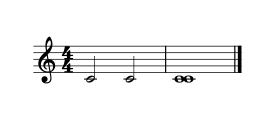
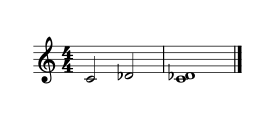
- Ode to Joy (2nd and 3rd notes)
- Theme from Jaws
- A Hard Day's Night (in
It's been
) - Isn't She Lovely (Stevie Wonder)
- Pink Panther Theme • Actually chromatic approach noted to a minor triad, based in the Tonic of the key. First two notes of the triad are approached chromatically ascending and the last one descending.
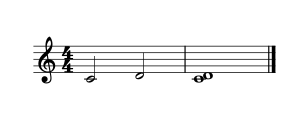
- Frere Jacques
- Rudolph the Red-nosed Reindeer
- Do A Dear
- Silent Night
- First two notes of a major scale.
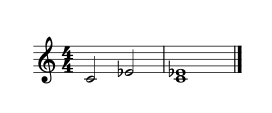
- Brahms's Lullaby
- Greensleeves
- The Sound of Silence by Simon and Garfunkel
- Smoke on the Water
- O Canada
- Hallelujah
- Iron Man by Black Sabbath
- Light My Fire (You know)
- First two notes of a Blues scale
- Georgia On My Mind
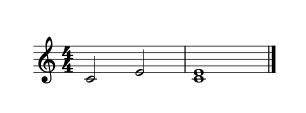
- Ob-la-di Ob-la-da by The Beatles
- Kum By Ya
- Here THere and Everywhere by The Beatles
- Have Yourself a Merry Little Christmas
- Michael Row Your Boat Ashore
- When the Saints Go Marching In
- Sir Duke (Stevie Wonder) – Major Triad Root Third Fifth
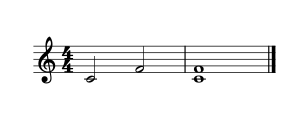
- Here Comes the Bride
- Oh Christmas Tree
- The Look of Love
- Amazing Grace
- Auld Lang Syne
- Love Me Tender
- Summer Nights (Bass Line)
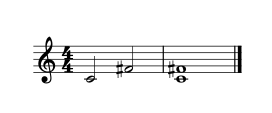
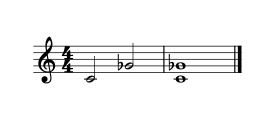
- The Simp – sons
- Ma ri a, from West SStory
- Meet George Jet son, from The Jetsons
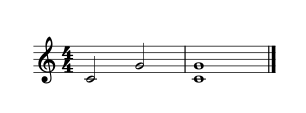
- Can't Help Falling In Love (on Wise men)
- Blue Skies
- Hey There Georgie Girl
- My Favorite Things
- Scarborough Fair
- Theme from Star Wars
- Theme from E.T.
- Twinkle, Twinkle Little Star (from 1st to 2nd
twink-le
)
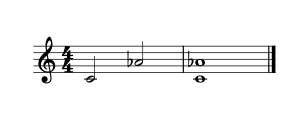
- Black Orpheus
- In My Life by The Beatles (guitar intro)
- Theme From Love Story
- Scott Joplin's The Entertainer (main theme after the intro)
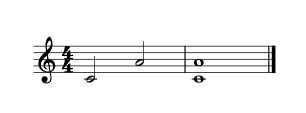
- The Days of Wine and Roses
- My Bonnie Lies Over The Ocean
- Jingle Bekks (on
dash-ing
through the snow) - My Way
- I Heard the Bells
- the N B C theme (the chimes)
- Take the A Train
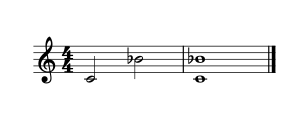
- Theme from Star Trek
- Somewhere (from West Side Story)
- The Winner Takes All (by ABBA)
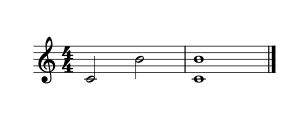
- Don’t Know Why – Norah Jones,
“I waited ’till I saw the sun”
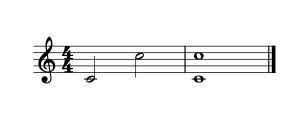
- Bali Ha'i" from South Pacific
- Blue Bossa
- Hi Ho Hi Ho
- Let It Snow (Oh, the weather …)
- Singing In The Rain (I'm singing)
- Some where Over the Rainbow (then descends a minor second to the major seventh of the scale
- The Christmas Song (Chest-nuts)
- When You Wish Upon A Star
- Fur Elise
- Joy to the World (Major Scale Descending)
- Jingle Bell Rock
- Stella by Starlight
- Three Blind Mice
- Mary Had a Little Lamb
- Satin Doll
- Yesterday
- Beethoven's 5th (G G G Eb) Ludwig Van Beethoven's 5th Symphony in C Minor (Full)
- Camptown Races
- This Old Man
- Misty
- Hey Jude
- Star Spangled Banner
- Major Third: i.e., C down to Ab
- Giant Steps • Descends a major seventh chord from the major seventh of the chord to the root of the chord. Basically a root inversion of the chord descending.
- Summertime
- Old MacDonald Had a Farm
- Frere Jacques ("Ding Dang Dong...")
- Back To the Future theme
- Feelings
- Flintstones Theme (Flint stones meet the ...)
- Have You Meet Miss Jones
- It Don't Mean a Thing (Duke Ellington)
- Seven Steps to Heaven
- What Do You Do With A Drunken Sailor
- Love Story Theme
- Body and Soul
- Over There
- Sweet Caroline
- Crazy
- Watermelon Man
- I love you (Cole Porter)
- Have Yourself A Merry Little Christmas (Nat King Cole)
- Crazy (2nd line "I'm crazy…"
- Willow Weep For Me
- My Girl guitar lick
- I Saw Mommy Kissing Santa Claus
- Joy to the World — C B A G F E D C
- Major 7th chord:
- Jingle, Jingle, Jingle The first four notes are a major seventh chord, the 1 3 5 7 of the major scale of key of the song.
- Major: ( Do - Mi - Sol ) i.e., C EC G
- Sir Duke (Stevie Wonder)
- Whole Tone: ( Do - Mi - Sol ) i.e., C EC G
- You Are The Sunshine of My Life (Stevie Wonder)
- Hunt and Peck enough to train your fingers to follow the ear – or –
- Have a plan to train the ear and hands to work together, thus making the hands to the ear connection quicker. Creating a plan is where a teacher can really help. And, if you've had bad experiences with teachers don't give up on them just try another teacher, good teachers are out there. Typically jazz musicians will be the best teachers in the playing by ear department. Remember playing by ear does not mean practicing by ear. Practicing and learning are different then performing.
Here Comes the Brideare a perfect fourth. If using C as the first note then F is the perfect fourth above C. Try putting any finger on any note of the ukulele and then play the second,
Here Comes…correctly the first time. If you can't, the fingers haven't been trained enough to
Play by Ear", to obey the hands for the particular sound of that interval. This is then where the mind comes and inner ear come in to play and and intellectually knows where the interval of a perfect fourth is and trains the hands to follow e ear.


Related Lessons, Videos, Lesson Series, Songs, Books & Reference Charts, Resources & Assets, Workshops are below.
Listening to songs and wanting to play the same songs on ukulele – that's what draws most people to the ukulele. That and it looks like a load of fun and easy to play – which it is. Then you need to actually remember the songs that you're learning, so you can play them again. And, hopefully, not have to read them off a sheet all the time.
For music and learning an instrument like the ukulele or guitar, it's all about the making the connection between your Mind, your Hands, and your Ear. When listening to music, we enjoy it at the tempo the composer or artist intended, in real time. Only the ear is involved in listening. This is passive listening and you're simply enjoying the music. This is what we do every day and it's what draws us to want to learn a musical instrument.
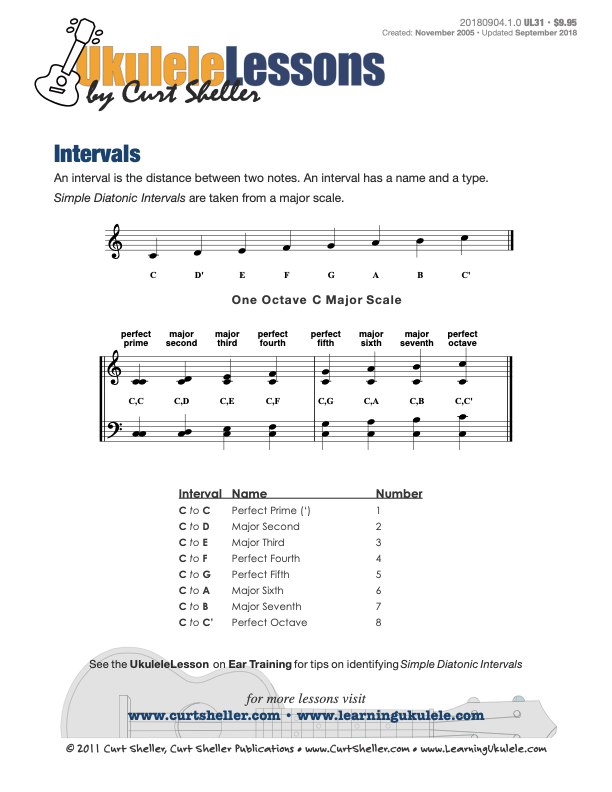
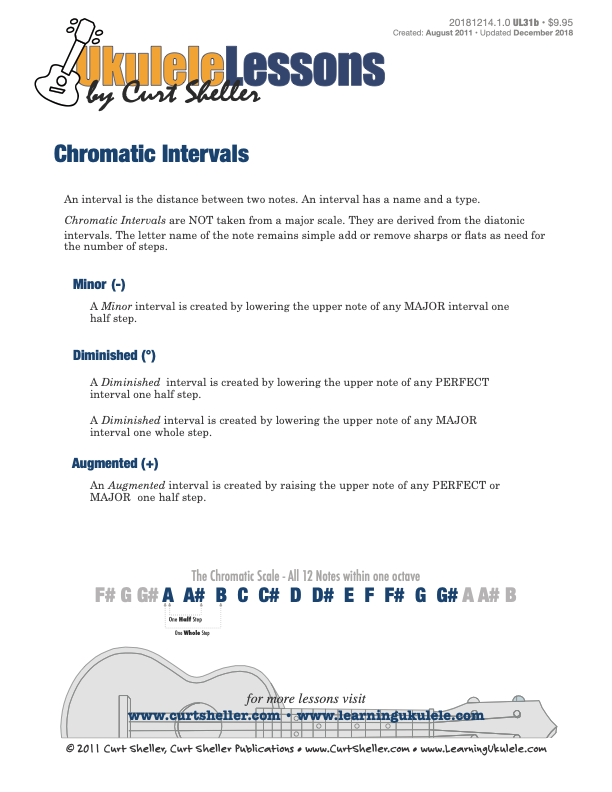
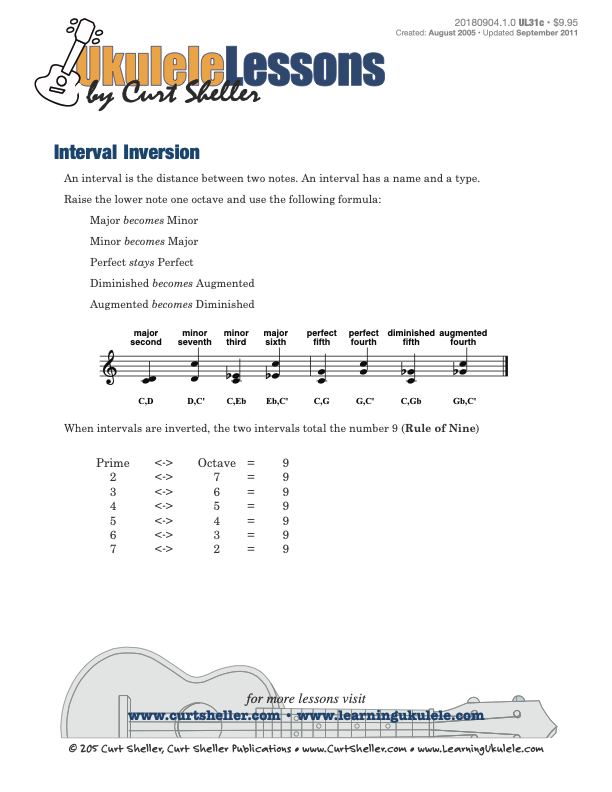
An interval is the distance between two notes. An interval has a name and a type. Intervals can be played one note (melodic) or two notes (harmonic) at a time, ascending or descending. Simple and Compound Intervals are taken from a major scale. Chromatic Intervals are NOT taken from a major scale. They are derived from the diatonic intervals.

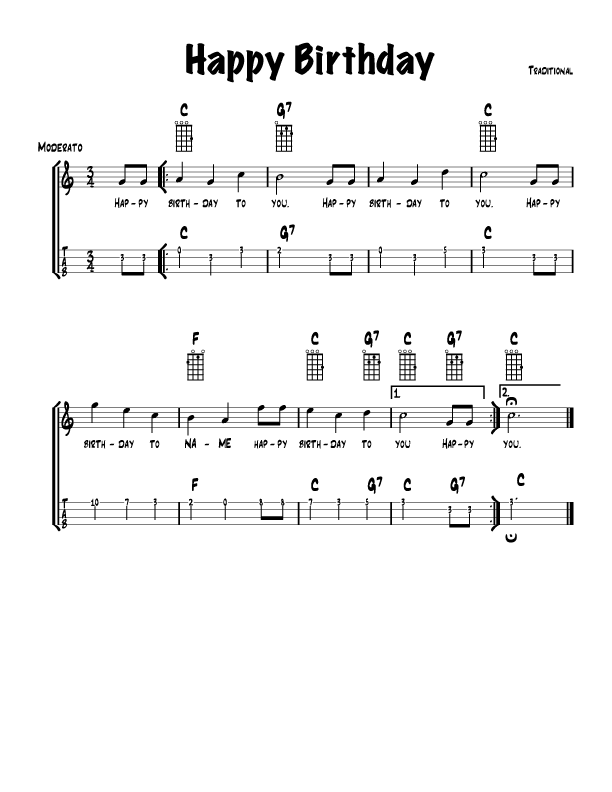
Happy Birthday to You, also known more simply as Happy Birthday, is a song that is traditionally sung to celebrate the anniversary of a person's birth. According to the 1998 Guinness Book of World Records, "Happy Birthday to You" is the most recognized song in the English language, followed by "For He's a Jolly Good Fellow" and "Auld Lang Syne".
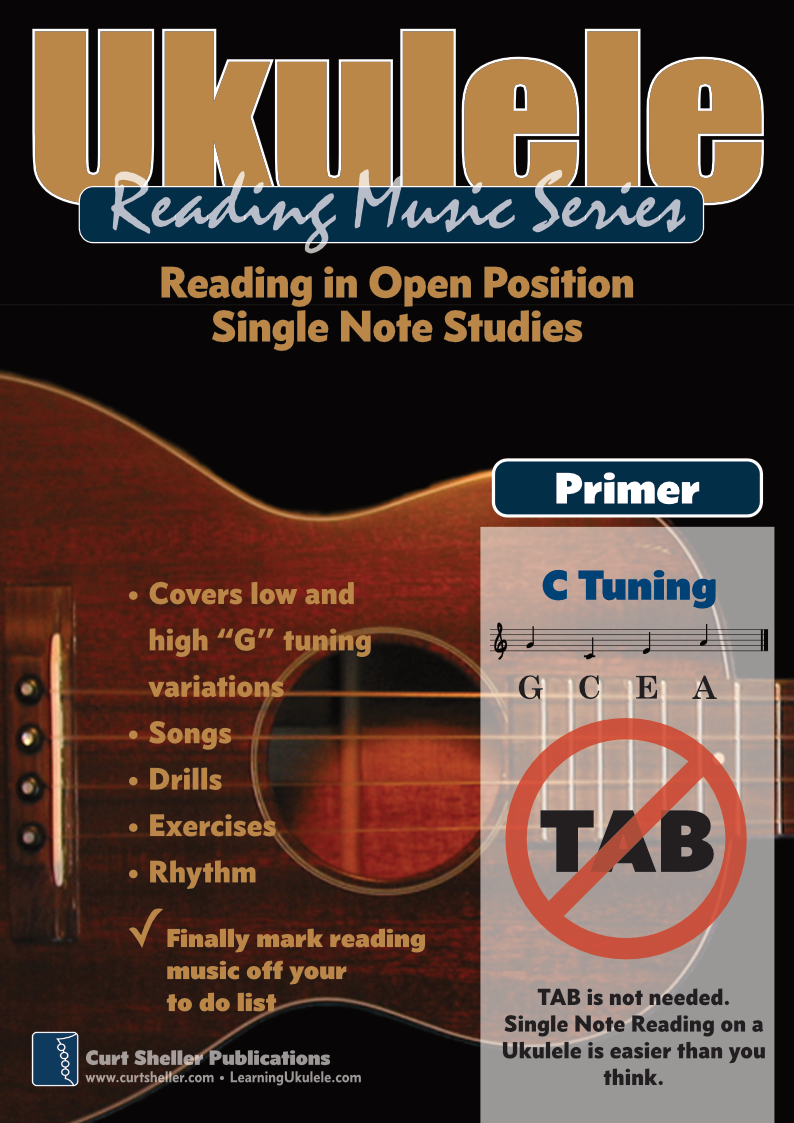
Daily Practice Material for the Contemporary Ukulele Player is an organized collection of daily practice and reference material for the contemporary ukulele player. This material can be used to develop the vocabulary and knowledge necessary for single note playing.
Daily Practice Material for the Contemporary Musician is an organized collection of daily practice and reference material for the contemporary ukulele player. This material can be used to develop the vocabulary and knowledge necessary for single note playing.
Harmonic Analysis is the understanding of the functional sequence of chords. It is the process used to analyze the harmonic structure of a progression, song or composition. This analysis is then used to make scale selections for improvisation and chord substitution.

return in your investment)—it is this— learning the
f*ckingnotes of your OWN instrument. Sorry for the tough talks—but it is sooooo true!