Fingering is one of the most universal topics. Whether your style is Rock, Blues, Country, Jazz or Classical, these principles will improve your technique, your solos, even your sight reading.


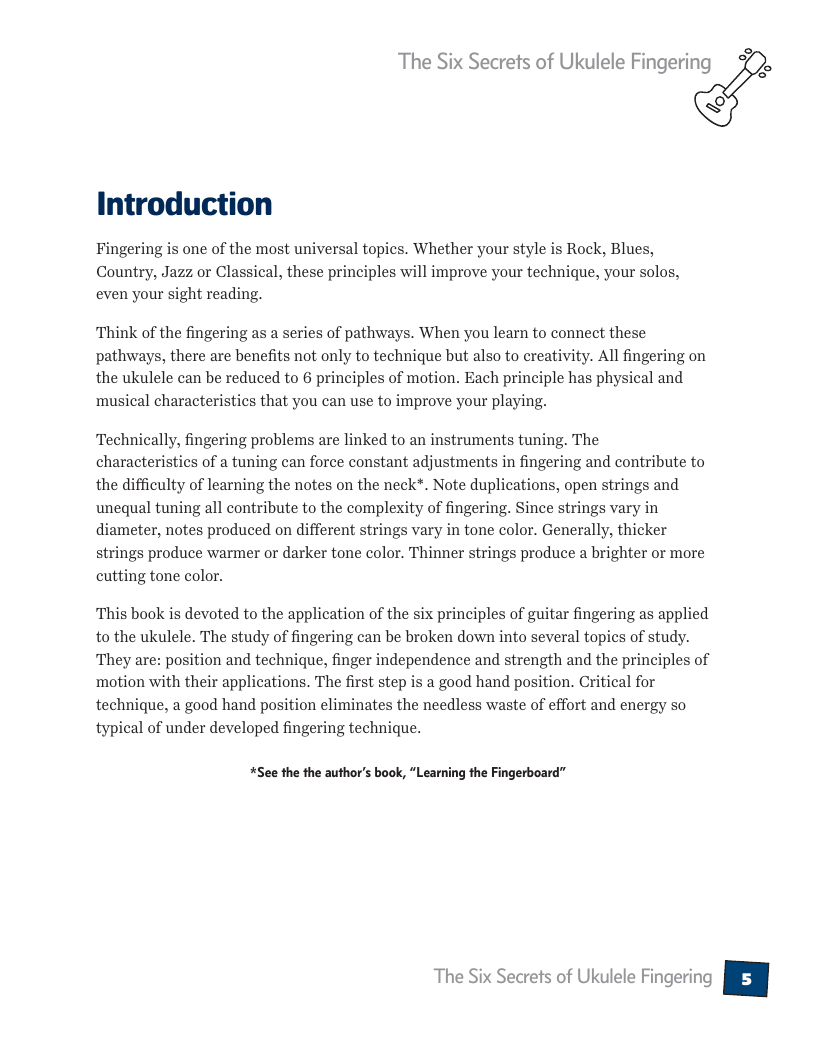

Fingering is one of the most universal topics. Whether your style is Rock, Blues, Country, Jazz or Classical, these principles will improve your technique, your solos, even your sight reading.
Available for Premium Site Access Plans Only
Think of the fingering as a series of pathways. When you learn to connect these pathways, there are benefits not only to technique but also to creativity. All fingering on the ukulele can be reduced to 6 principles of motion. Each principle has physical and musical characteristics that you can use to improve your playing.
Technically, fingering problems are linked to an instruments tuning. The characteristics of a tuning can force constant adjustments in fingering and contribute to the diTculty of learning the notes on the neck*. Note duplications, open strings and unequal tuning all contribute to the complexity of fingering. Since strings vary in diameter, notes produced on difierent strings vary in tone color. Generally, thicker strings produce warmer or darker tone color. Thinner strings produce a brighter or more cutting tone color.
This book is devoted to the application of the six principles of guitar fingering as applied to the ukulele. The study of fingering can be broken down into several topics of study. They are: position and technique, finger independence and strength and the principles of motion with their applications. The first step is a good hand position. Critical for technique, a good hand position eliminates the needless waste of efiort and energy so typical of under developed fingering technique.
Fingering is one of the most universal topics. Whether your style is Rock, Blues, Country, Jazz or Classical, these principles will improve your technique, your solos, even your sight reading.
Available for Premium Site Access Plans Only
Think of the fingering as a series of pathways. When you learn to connect these pathways, there are benefits not only to technique but also to creativity. All fingering on the ukulele can be reduced to 6 principles of motion. Each principle has physical and musical characteristics that you can use to improve your playing.
Technically, fingering problems are linked to an instruments tuning. The characteristics of a tuning can force constant adjustments in fingering and contribute to the diTculty of learning the notes on the neck*. Note duplications, open strings and unequal tuning all contribute to the complexity of fingering. Since strings vary in diameter, notes produced on difierent strings vary in tone color. Generally, thicker strings produce warmer or darker tone color. Thinner strings produce a brighter or more cutting tone color.
This book is devoted to the application of the six principles of guitar fingering as applied to the ukulele. The study of fingering can be broken down into several topics of study. They are: position and technique, finger independence and strength and the principles of motion with their applications. The first step is a good hand position. Critical for technique, a good hand position eliminates the needless waste of efiort and energy so typical of under developed fingering technique.


Related Lessons, Videos, Lesson Series, Songs, Books & Reference Charts, Resources & Assets, Workshops are below.
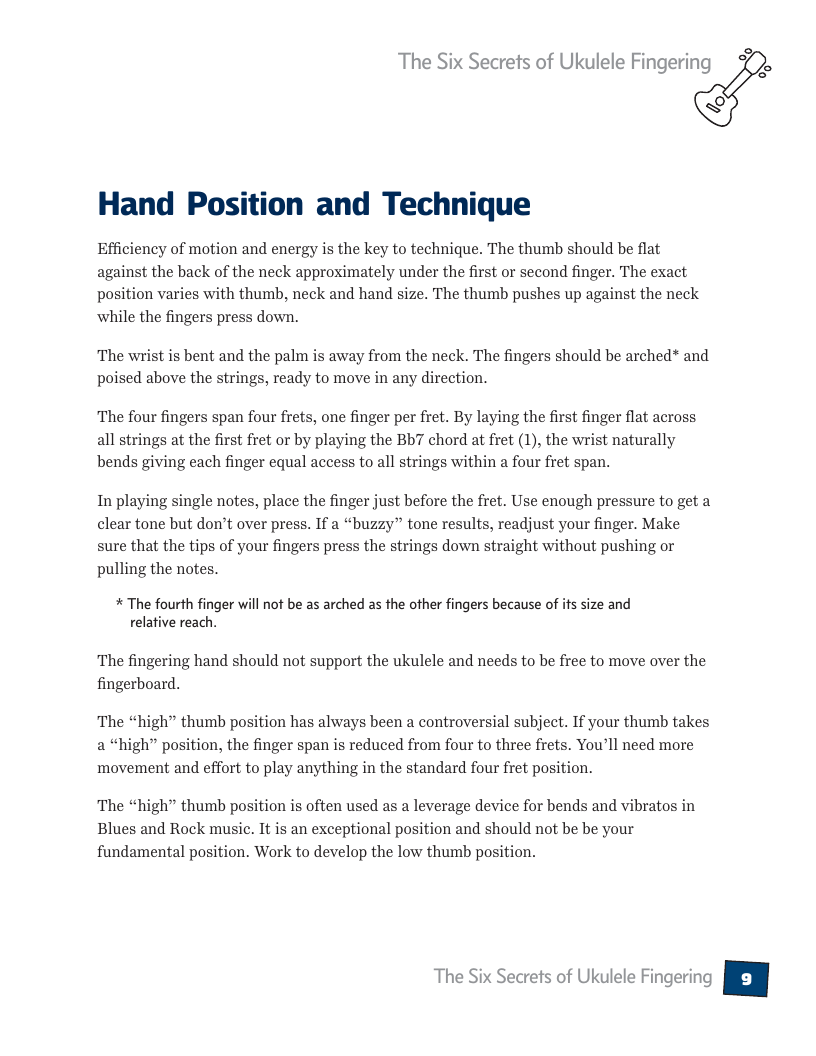
Efficiency of motion and energy is the key to technique. The thumb should be flat against the back of the neck approximately under the first or second finger. The exact position varies with thumb, neck and hand size. The thumb pushes up against the neck while the fingers press down.
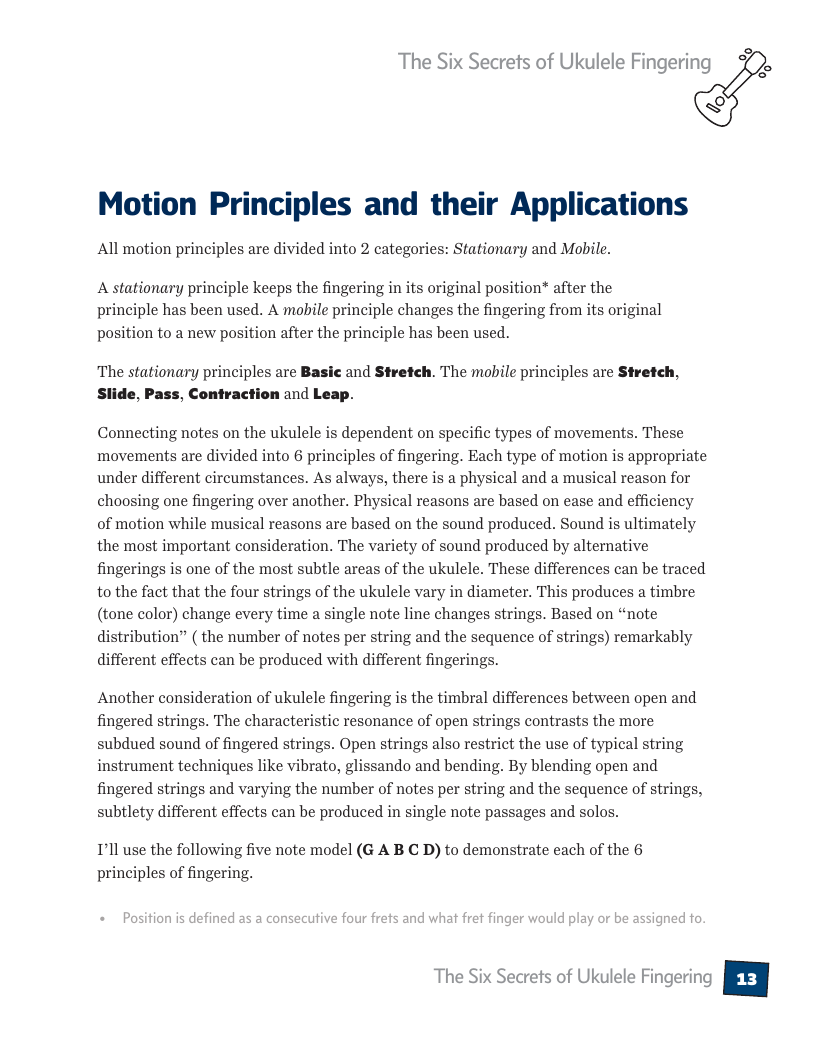
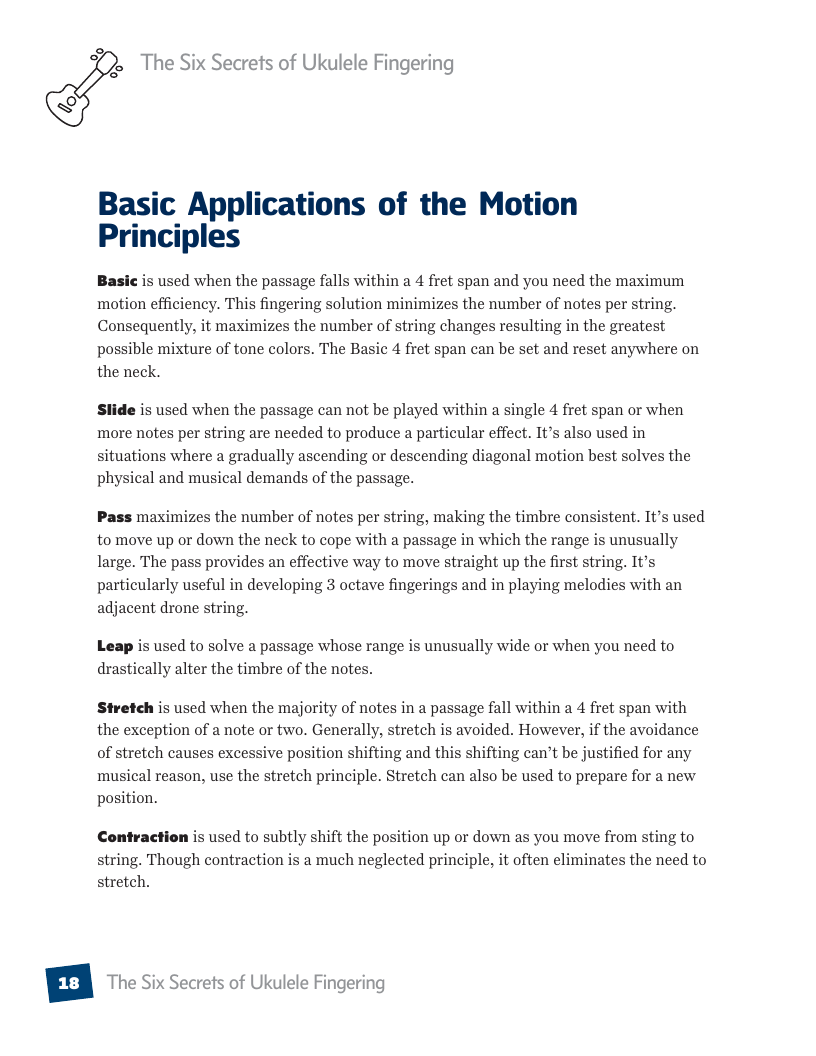
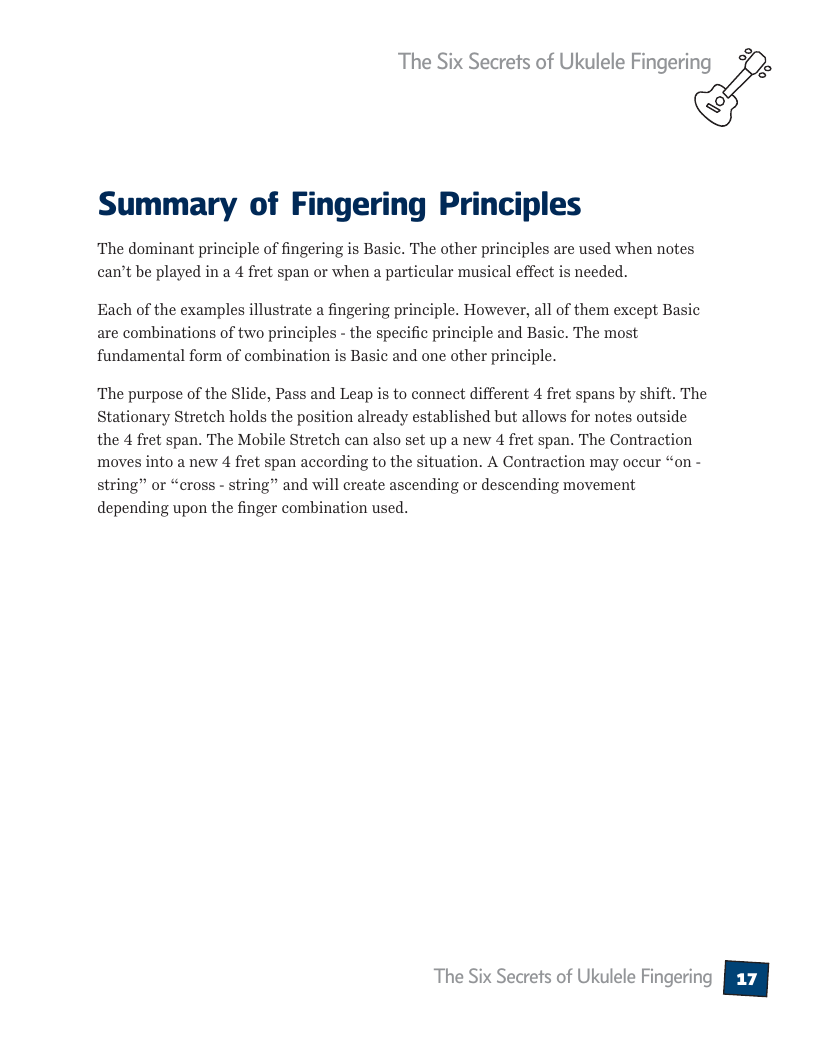






Learn the six fingering principles to navigating the ukulele fingerboard. Fingering is one of the most universal topics. Whether your style is Rock, Blues, Country, Jazz or Classical, these principles will improve your technique, your solos, even your sight reading. Think of fingering as a series of pathways. When you learn to connect these pathways, there are benefits not only to technique but also to creativity. All fingering on the ukulele can be reduced to 6 principles of motion. Each principle has physical and musical characteristics that you can use to improve your playing.


Learn the six fingering principles to navigating the ukulele fingerboard. Fingering is one of the most universal topics. Whether your style is Rock, Blues, Country, Jazz or Classical, these principles will improve your technique, your solos, even your sight reading. Think of fingering as a series of pathways. When you learn to connect these pathways, there are benefits not only to technique but also to creativity.

return in your investment)—it is this— learning the
f*ckingnotes of your OWN instrument. Sorry for the tough talks—but it is sooooo true!


Learn to read single note melodies in the first/open position is a lot easier than you might think. Book: Ukulele – Reading Music Series – Primer

An organized collection of daily practice and reference material for the contemporary ukulele player for developing the vocabulary and knowledge necessary for single note playing. Book: Daily Practice Material for the Contemporary Ukulele
Checkout the Books & Reference Charts for additional Handy, Dandy Reference Charts.
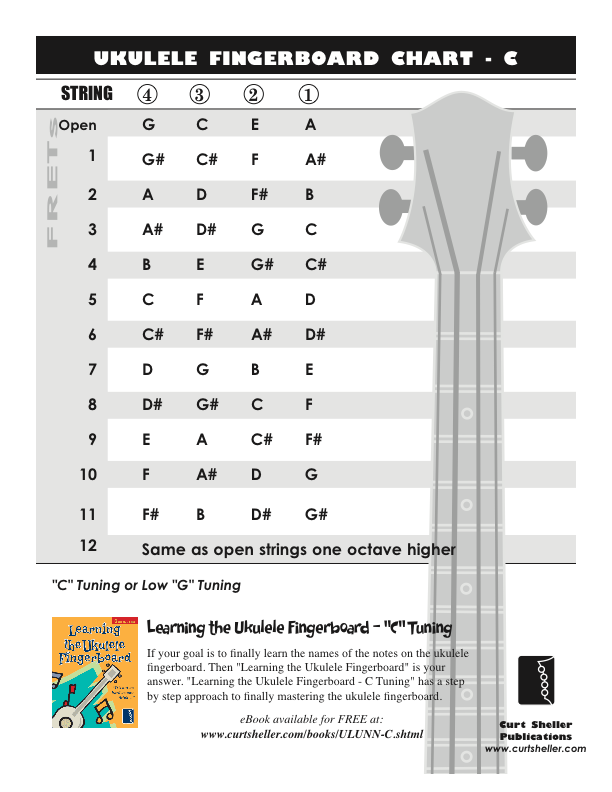
Ukulele Fingerboard Chart for C Tuning, Low or High G – G C E A
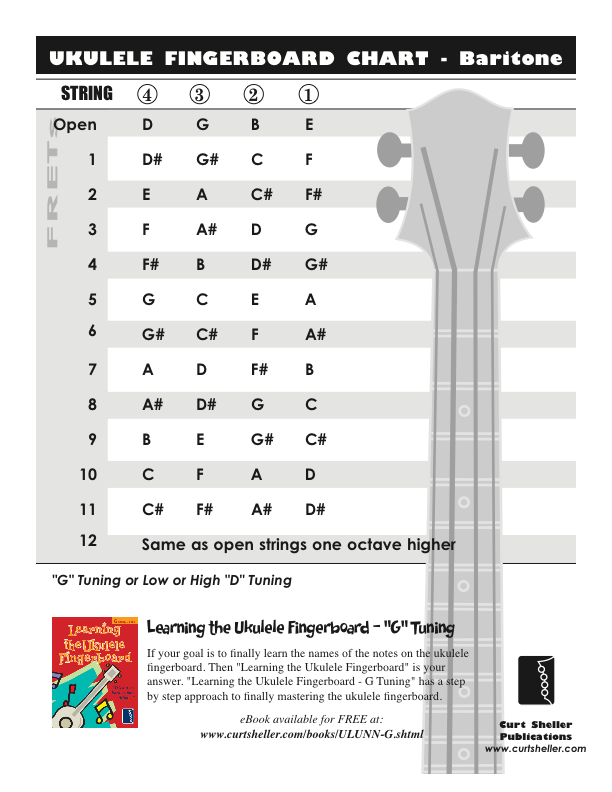
Ukulele Fingerboard Chart for G Tuning, Low or High A – D G B E

A handy reference chart of all 15 major and relative minor key signatures. US Letter 8.5 x 11 sized (ANSI-A) , A4
Six Secrets of Ukulele Fingering - Introduction.

.jpg)